

THE DAWN OF CIVILIZATION: THE MYTH OF THE ANCIENT VIET
Could it have been a bolt of lightning striking the earth, a miraculous seed rising from the void, or the crystallization of will, fear, and the desire to rise from the mud of early humans surrounded by untamed nature and mysterious fate?
Imagine a land lying south of the Yellow River, stretching from Dongting Lake to what is now northern Vietnam, a place ruled by the scorching sun and the southern monsoon winds. On the map of the ancient world, this land was once known as the Eden of the East. More specifically, the ancient Viet civilization developed in the southern part of ancient China, in a region that today largely corresponds to Guangdong and Yunnan in the People’s Republic of China.
At first glance, this may not seem like an ideal birthplace for any great civilization. It lacked basic resources such as wood, stone, and metal, and was constantly exposed to the harsh fluctuations of nature. Yet it was precisely under such severe conditions, around the fifth millennium BCE, that a miracle emerged from the fertile alluvial mud carried by the Yellow River. From the tiny seeds of human will and intelligence, a civilization began to take root and flourish, eventually shaping the entire course of world history in ways we may still not fully recognize.
The ancient Viet civilization was not merely one of the earliest civilizations. It was the very origin of civilization as we understand it today. For thousands of years before that, humans lived as nomads, hunters, and gatherers, or gathered in small villages, entirely dependent on nature.
With wet-rice civilization, the concepts of the city, the state, law, writing, and science began to take shape. They – the ancestors of modern Vietnamese people not only built monumental fired-brick cities, but also created structures of thought and social patterns that we continue to inherit and develop to this day. This was an extraordinary leap forward: a great transformation of humankind from a primal state to the threshold of complexity.
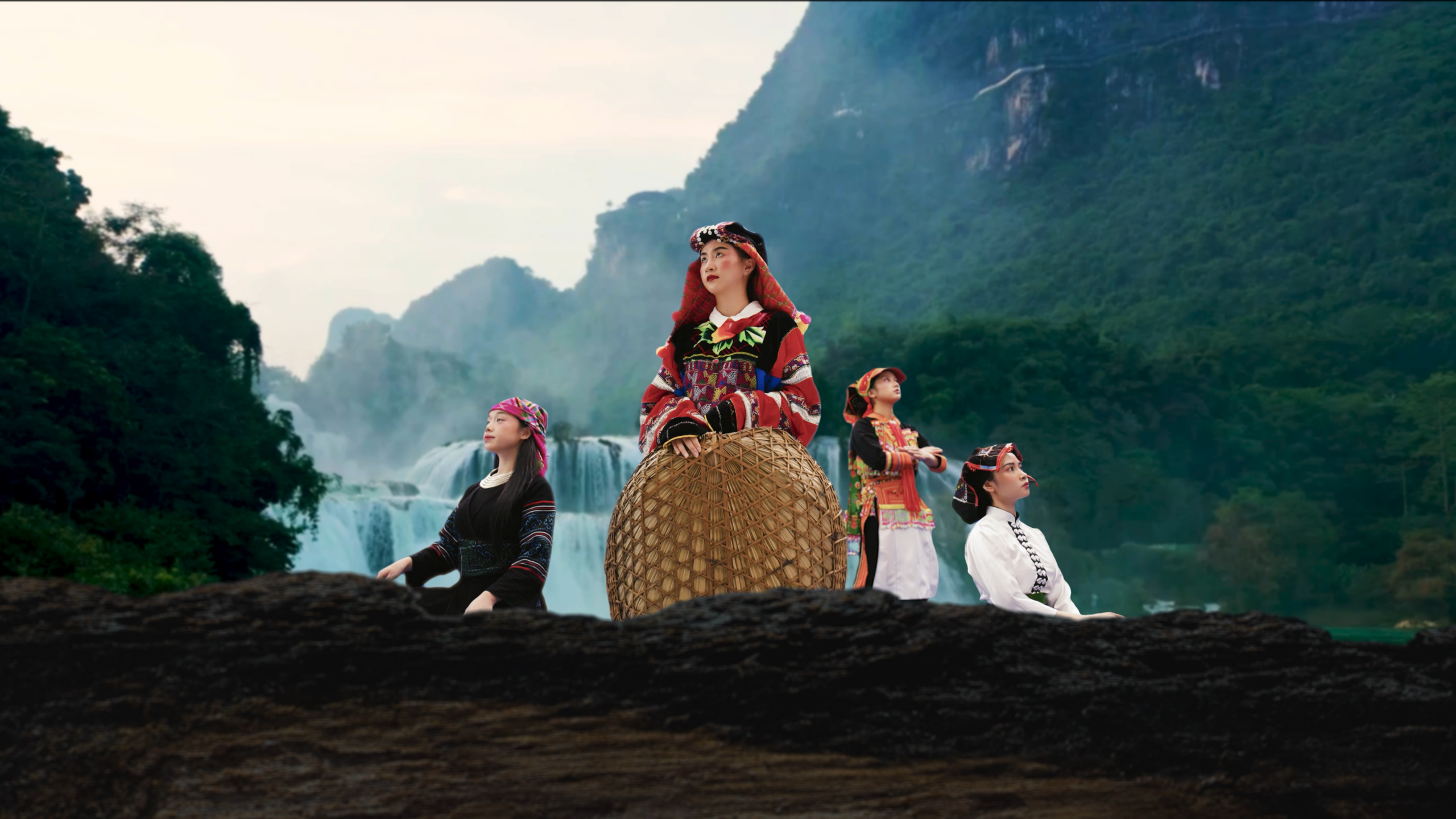
To truly understand Vietnam, we need to set aside the assumptions of the modern age and return to the mindset of people who lived in a young world, one filled with mysteries and challenges. Ancient Viet communities faced severe trials of survival. Their land, though fertile thanks to alluvial deposits, lacked rainfall and basic natural resources such as wood, stone, and metal.
It was precisely under these difficult conditions that human intelligence and adaptability were pushed to their limits. They did not surrender to fate. They entered into a great struggle with nature and prevailed through relentless creativity. This was not only a story of survival, but also an epic of humanity’s will to rise.
Let us speak of one of their greatest achievements, one that, in philosophical terms, completely transformed the relationship between human beings and the world: large-scale agriculture and irrigation systems. Ancient Viet communities did not merely cultivate crops to sustain themselves. They transformed wild lands into abundant rice fields by building complex networks of canals and reservoirs. This required foresight, the ability to organize labor on a large scale, and a deep understanding of natural laws, especially the cycles of water and harvest seasons. It marked a leap from living entirely dependent on nature to actively reshaping the landscape, creating food surpluses, a prerequisite for the emergence of specialized labor, social classes, and ultimately, cities. This surplus freed human beings from the daily burden of searching for food, opening the door to creativity and development.
Food surplus and organizational capacity led to the birth of city-states and alliances, including Xích Quỷ. These were not merely dots on an ancient map, but autonomous centers of culture, economy, and politics. Each city had its own guardian deity, a monumental temple, and a complex system of governance.
For the first time, human beings no longer lived only in small, scattered communities, but gathered in urban settlements of tens of thousands of people. This demanded entirely new social structures and unprecedentedly complex rules of governance. It was the birth of urbanization, a concept we continue to refine to this day. And as populations grew, and economic transactions became more complex, an urgent need emerged. Its answer would become the foundation stone of all modern knowledge: writing.
The ancient Viet people invented Khoa Đẩu script, a form of tadpole-shaped writing. It began as simple drawings, then developed into abstract symbols inscribed on clay and turtle shells. This was not merely a tool for record-keeping. It was a revolution in thought.
Writing allowed the ancient Viet people to store information beyond the limits of individual memory, transmit knowledge across space and time, and create a foundation for law, administration, literature, and science. With writing, ideas were no longer fleeting waves of sound. They became enduring traces on stone, bone, and turtle shell. It was the immortalization of thought, opening the era of recorded history.
 BACK
BACK